Archive | Recipes RSS feed for this section

Reconstruction of Garbanzo Spinach Soup from Spain

Reconstructed Spanish Garbanzo Bean & Spinach Soup

Reconstructed Spanish Garbanzo Bean & Spinach Soup

While on a recent trip to Spain to spend time with our study-abroad daughter, we had the joy of eating some really memorable dishes.  I came home with a mission to recreate some of our favorites while the taste memories are still intact.  This soup was one of my husband’s favorites, and since the weather has been cool and rainy lately, I thought I’d start with this one.

The soup (or stew) we had in Burgos was actually made with fish, but I substituted chorizo sausage for more robustness (is that a word?), and added an orange zest/parsley garnish for brightness.  It was really very good.  Not exactly what we had in Burgos, but there were lots of sighs and requests for more from my husband.  He is fairly stoic with the praise, so I’ve learned how many sighs and guttural sounds equals a score of ten.  This soup got a nine.  Perfect for a rainy spring day.

Reconstructed Spanish Garbanzo Bean & Spinach Soup

  • 1-2 Tbsp olive oil
  • 1/2 to 1 lb. chorizo sausage (removed from casings)
  • 1 med. red onion, finely chopped
  • 1 carrot, finely chopped
  • 1 celery stalk, finely chopped
  • 6 cloves garlic, crushed
  • 2 Tbsp tomato paste
  • 2 tsp thyme leaves (fresh if possible)
  • 1/2 tsp red pepper flakes
  • 1 tsp smoked paprika
  • 2 cans garbanzo beans, rinsed
  • 2 26-oz packages chicken stock (be sure and get stock, not chicken broth)
  • 2 bunches fresh spinach (or greens)
  • Italian parsley and fresh grated orange zest for garnish

Directions:

  1. Heat olive oil in dutch oven (if you don’t have dutch oven, use iron skillet for browning meat and vegetables and then transfer to large stock pot).  Add chorizo and cook over medium heat for 2-3 minutes until browned.
  2. Push chorizo to side and add more olive oil if needed and cook onion, carrot, celery over med-low heat for 6-8 minutes or until vegetables are tender but not brown.
  3. Stir in garlic, thyme, pepper flakes and paprika and cook for 30 seconds or until fragrant.
  4. Add tomato paste and cook until slightly thickened (about 1 minute)
  5. Add garbanzo beans and stock
  6. Combine well and bring to a boil over high heat.  Reduce to low and cook, covered about 45 minutes.
  7. Add chopped, drained spinach leaves to pot and cover.  Cook over med-low heat until spinach is soft (about 5 minutes
  8. Season with salt and pepper to taste (chorizo is salty so be careful).
  9. Garnish with parsley and orange zest and serve warm with some good hearty bread.

Cheers!


Comments { 4 }

Best Peanut Butter Cookies with Raspberry Chambord Jam Filling

Peanut Butter and Raspberry Chambord Jam Cookies

Peanut Butter and Raspberry Chambord Jam Cookies

I have been known (and hopefully loved) as a cookie addict since I was very young.  Comments used to sound like this: “How can you eat so many cookies and stay so thin?”  In the last 5-10 years the comments are more like, “How can you eat so many cookies?”  Hmm-m, I get that I could stand to cut back on the cookies these days, but I don’t think it’s in the cards.

I have many favorite cookies, with peanut butter cookies ranking in the top ten.  I also love raspberry jam, so why not a delectable combination?

The best peanut butter cookie I have run across is a crunchy, crumbly cookie from Linda Weber, which I found in a Fine Cooking magazine, April/May 2001.  I filled the cookies with some of our Raspberry Chambord Jam, and the result brought the peanut butter cookie up to the top five in the cookie rankings.  You could, of course, add any jam or chocolate, or cream filling you wanted with the same delicious results.  Nutella would be a classic filling.  I think I’ll try them with Blueberry Lavender Merlot Jam next.

Try these with your favorite filling.  You can’t possibly go wrong!

Recipe for Peanut Butter Cookies from Fine Cooking magazine, April/May 2001:

  • 6 oz. (1 1/3 cups) all-purpose flour
  • 2 oz. (2/3 cup) cake flour
  • 1/2 tsp baking soda
  • 1/4 twp salt
  • 6 oz. (12 Tbs.) unsalted butter, completely softened at room temperature
  • 3/4 cup smooth peanut butter (Skippy is good)
  • 1/2 cup sugar
  • 1/2 cup firmly packed light brown sugar
  • 1 tsp. pure vanilla extract
  • 1 large egg

Directions:

  1. Heat oven to 350 degrees F.  Line two baking sheets with parchment.
  2. In medium bowl, sift together the two flours, baking soda, and salt.
  3. In the bowl of an electric mixer, cream the butter, peanut butter, and sugars with the paddle attachment until light and fluffy.  Add the vanilla and egg; continue creaming until smooth and fluffy, about 3 min. with an electric mixer.
  4. Stir in the flour mixture by hand just until it’s incorporated; don’t overmix
  5. Drop full tablespoonfuls of batter, about 2 inches apart, onto lined baking sheets.  With floured fingers, flatten each dab of batter into 2 inch round.
  6. Bake until cookies are puffed and golden, 12-14 min, rotating baking sheets if needed for even baking.  Transfer cookies to rack to cool

Filling:  When cookies are cooled, use a spatula or butter knife to spread teaspoon of  Raspberry Chambord Jam (or jam of your choice) on half of the cookies.  Set other half of cookies on top of each filled cookie, pressing gently to spread filling. Store sealed at room temperature or in refrigerator.


Comments { 0 }

Coconut Pancakes with Mango Lime Jelly as the Topping

Coconut Pancakes with Mango Ginger Lime Jelly

Coconut Pancakes with Mango Ginger Lime Jelly

The boys at our house are usually in charge of Sunday breakfast, and pancakes and waffles are their specialties (always accompanied by bacon, of course).  My husband particularly likes to make some sort of “Hawaiian” version of pancake with pineapples and coconut.

Not to be left out, I offered up my Mango-Ginger-Lime Jelly as a topping to their wonderful coconut creation.  It was definitely a good match-up and one to keep in the files!

Their pancake recipe varies every time they make them, but the pancakes pictured here were from a recipe found in Cooking Light magazine.  They were delightfully light, with the coconut flavor really shining through.  Any type of jelly or jam would work as a topping for with these pancakes, but I thought the mango-ginger-lime jelly was a particularly perfect pairing.

Mango-Ginger-Lime Jelly as Coconut Pancake Topping

Mango-Ginger-Lime Jelly as Coconut Pancake Topping


Coconut Pancake Recipe;  from Cooking Light Magazine, March 2007:

3/4 c. all-purpose flour

1/3 cup coconut flour or all-purpose flour

1 1/2 tsp baking powder

1 1/2 tsp granulated sugar

1/4 tsp salt

1 cup light coconut milk

1/4 cup fat-free milk

1 Tbsp canola oil

1 large egg


Directions:

  1. Lightly spoon flours into dry measuring cups, and level with a knife. Combine flours, baking powder, sugar, and salt in large bowl. Combine coconut milk, ft-free milk, oil and egg in small bowl, stirring with a whisk. Add milk mixture to flour mixture, stirring with a whisk (batter will be thick).
  2. Pour about 1/4 cup batter per pancake onto a hot nonstick griddle or nonstick skillet; spread gently with a spatula. Cook 2 minutes or until tops are covered with bubbles and edges look cooked. Carefully turn pancakes over; cook for 2 minutes or until bottoms are lightly browned. Serve with fresh limes and mango ginger lime jelly.


Accompaniments for Coconut Pancakes

Accompaniments for Coconut Pancakes


Comments { 0 }

Unique Fruit Syrups for Waters, Cocktails, Shrubs, Smoothies and More

Sparkling Water with Lemon Ginger Syrup

Sparkling Water with Lemon Ginger Syrup


Unique Fruit Syrups for Beverages

Unique Fruit Syrups for Beverages


Working with fruit from our farm naturally led to making fruit preserves, but there comes a time when the mind seems to always say “OK, what’s next?”   I looked at fruit based pancake syrups, but not being a big breakfast person, this idea was quickly discarded.  Beverages!  Now there was something I enjoyed on a daily basis (water), and also during celebrations (cocktails).  I also wanted to try and get my daughter off of her diet soda habit, so I started experimenting with “beverage syrups”.  Like jellies without the “gel”.

Beverage syrups (that is, natural fruit beverage syrups) have a lot going for them actually:

  • You don’t need very much to give flavor to a drink, so you can keep the calorie content low.  You have the option of flavoring your drink to your own standard of taste and calorie content, unlike sodas or flavored waters you buy already prepared;
  • The fruit is “real” fresh fruit (not flavoring), and you don’t need to boil it for very long, so the beneficial nutrients are not boiled out of it;
  • They keep in the refrigerator for 2 months and you add the carbonation fresh each time you use them, so you don’t have to worry about your drink being “flat”;
  • Herbs and spices are easy to infuse into the syrups while being made, so you can get some very creative, unique flavors;
  • There is a lot of versatility in using them, from water, to sodastream carbonated waters, to lemonade, to tea, to smoothies, to cocktails.  They can also be drizzled over fruit salads, combined with vinegar for Shrubs, used as a glazed over grilled meats, and combined with oil and vinegar for salad dressings.

Here are some of the ways we have used the syrups lately:


Champagne with Strawberry Orange Cardamom Syrup

Champagne with Strawberry Orange Cardamom Syrup


 In celebration of  “Getting Ready to go to Spain” we combined a little Strawberry Orange Cardamom Syrup with some Champagne.  Hey, you can always come up with a celebration if you loosen up your idea of what defines a celebration, eh?

Recipe:  Just combine a couple of tablespoons of syrup with cold Prosecco, Champagne or Cava and stir.


Smoothies with Blueberry-Pomegranate Syrup

Smoothies with Blueberry-Pomegranate Syrup


Blueberry-Pomegranate Smoothies for lunch during this warm spring in March.  Basic recipe is to add following ingredients in a blender and blend:

  1. a frozen banana (fresh if you don’t have frozen)
  2. about 3 Tbsp. Blueberry-Pomegranate Syrup
  3. vanilla yogurt (can be frozen yogurt if you don’t mind the calories); amount you add depends on how thick you like your smoothies.  I add about a cup
  4. non-fat milk
  5. frozen blueberries (about 1/2 cup)


Citrus water pitcher with Ginger Lime Syrup Drink

Citrus water pitcher with Ginger Lime Syrup Drink


The drink in this photo is lemonade in a pint jar with a couple of tablespoons of Ginger Lime Syrup stirred in.  The water pitcher with fruit in it is something we’re trying to keep filled up and visible so that we are tempted to drink more water.  It’s always much easier to go to water instead of soda if it is on your counter looking beautiful and refreshing (and easy).  Sometimes we might add a syrup to the water, and sometimes not.  I am anxious to see if this addition to our kitchen will lead my daughter to pouring a glass of water rather than opening a diet soda.


Soda Stream

My Soda Stream

I got this SodaStream Genesis Black Sparkling Water & Soda Maker 3-pc. (except mine is red) last summer when I was getting into making the syrups.  I love it!  You just fill the gray liter bottle with water, screw it into the white attachment, pump the top five times, and Voila, you have sparkling water to keep in your fridge and use until you need to fill it with water and repeat.  It’s a perfect foil for the syrups.  Caveat:  the syrup packages that come with it do not taste very good and they do have various preservatives in them.

If you want to make your own fruit syrups, you can learn the process from this post on this blog, or of course you can order them online from me at HeathGlen.

These are just some ideas on how I personally like to use the syrups.  I know there are a lot of mixologists that are using syrups in all kinds of fancy cocktails.  Some sleuthing on google will lead you to a lot of different recipes for using the syrups.  I hope to experiment more with fruit vinegar shrubs this summer, but for now my SodaStream Genesis Black Sparkling Water & Soda Maker 3-pc. (comes in red also) is my go-to drink maker.  I wonder how carbonated shrubs would taste?


Cheers!


Comments { 0 }

Waffle sandwiches: Bacon, Lime Marmalade & Goat Cheese; Cranberry Hot Pepper Jam & Brie; Bacon, Tomato Jam and Aged Cheddar

Cornbread Waffle Sandwich with Bacon, Lime Marmalade & Goat Cheese

Cornbread Waffle Sandwich with Bacon, Lime Marmalade & Goat Cheese

What do you do when your husband forgets to pay the gas bill, it’s the weekend, you want to make dinner, and have no stove?  Pull out the waffle iron!

I had been pondering ways to use the Lime Marmalade that we make for a while now.  I’ve used it in margaritas, with cornbread and chile and on English muffins, but it is so intense that it can be paired with some pretty robust flavors and still shine through.  These waffle sandwiches pictured above were a wonderful foil for the the marmalade: sweet (the jam), salty (bacon), cruncy (waffles) and creamy (goat cheese).  They even managed to distract me from freezing to death in a house with no heat.  If he hadn’t been working so hard on our taxes, I may have been inclined to have “expressed” my frustration.  As it turned out, however, all is well.

While I had the jams out I experimented with a few other flavor combinations in the waffle sandwiches.  They were all pretty good.  I may have to make this a staple for quick and easy dinners.  Here are two more:

Waffle Sandwich with Dried Cranberries, Cranberry Hot Pepper Jam & Goat Cheese

Waffle Sandwich with Dried Cranberries, Cranberry Hot Pepper Jam & Goat Cheese

Using Cranberry Hot Pepper Jelly:  I added some dried cranberries to the cornbread waffle batter for this one, softened the goat cheese just a bit in the microwave, and added the hot pepper cranberry jelly on top rather than inside.  It’s a toss-up on my favorite between this and the lime marmalade.  I really loved the cornbread crunch with the creamy fillings.


Waffle Sandwich with Tomato Ginger Jam, Bacon & Aged Cheddar

Waffle Sandwich with Tomato Ginger Jam, Bacon & Aged Cheddar

Using Tomato Ginger Jam:  This one was more savory, as the tomato jam is not as sweet as the jellies.  I used aged cheddar cheese here, and added the bacon to give it that classic flavor combination.  The tomato ginger jam definately added more of a twist, with a hint of sweetness coming through.  You could use any kind of cheese here with good results.


For the waffles themselves, I used a light & crisp waffle recipe from:  Pamela Anderson, Fine Cooking magazine (recipe below).  I substituted 1/2 c.  cornmeal for 1/2 cup flour, and added a handful of dried cranberries to the batter for the Cranberry Hot Pepper Jelly.

Once the waffles are crisp and golden brown, take them out and assemble.  I spread one waffle square with jam, placed cheese on another square and heated it for  10 seconds in the microwave.  Add warm bacon between and stack the two squares together.  Cut in half and you are done.  Easy and very delicious.

You can use any waffle recipe you wish.  I used Fine Cooking’s recipe because I had it handy and it looked good.  Here is their recipe:

Fine Cooking’s Light, Crisp Waffles:

1/4 c. all-purpose flour

1/2 c. cornmeal

1/4 c. cornstarch

1/2 tsp salt

1/2 tsp baking powder

1/4 tsp baking soda 3/4 c. buttermilk

1/4 c. milk

6 Tbs. vegetable oil

1 large egg, separated

1 Tbs. sugar

1/2 tsp vanilla

Mix the flour, cornstarch, salt, baking powder, and baking soda in a medim bowl.  Measure the buttermilk, milk, and vegetable oil in another bowl or Pyrex measuring cup; mix in the egg yolk and set aside.

In another bowl, beat the egg whilte almost to soft peaks.  Sprinkle in the sugar and continue to beat until the peaks are firma and glossy.  Beat in the vanilla.

Pour the buttermilk mixture into the dry ingredients and whisk until just mixed.  Drop the whipped egg white onto the batter in dollops and fold in with a spatula until just incorporated.

Pour the batter into the center of the hot waffle iron, let it spread out a bit and close.  Follow the directions on your waffle iron for how long to cook it.


Hope you enjoy these as much as we did (although it still would have been nice to have had gas and be in a warm house!).


Comments { 0 }

Smoked Tomato Martini Recipe – rimmed with sun-dried tomato salt

Bartending in Portland Oregon got me through graduate school and I do believe I’ve used those bartending skills more in post-college life than the skill set of  my urban planning degree (especially if you include the people skills you pick up while bartending).

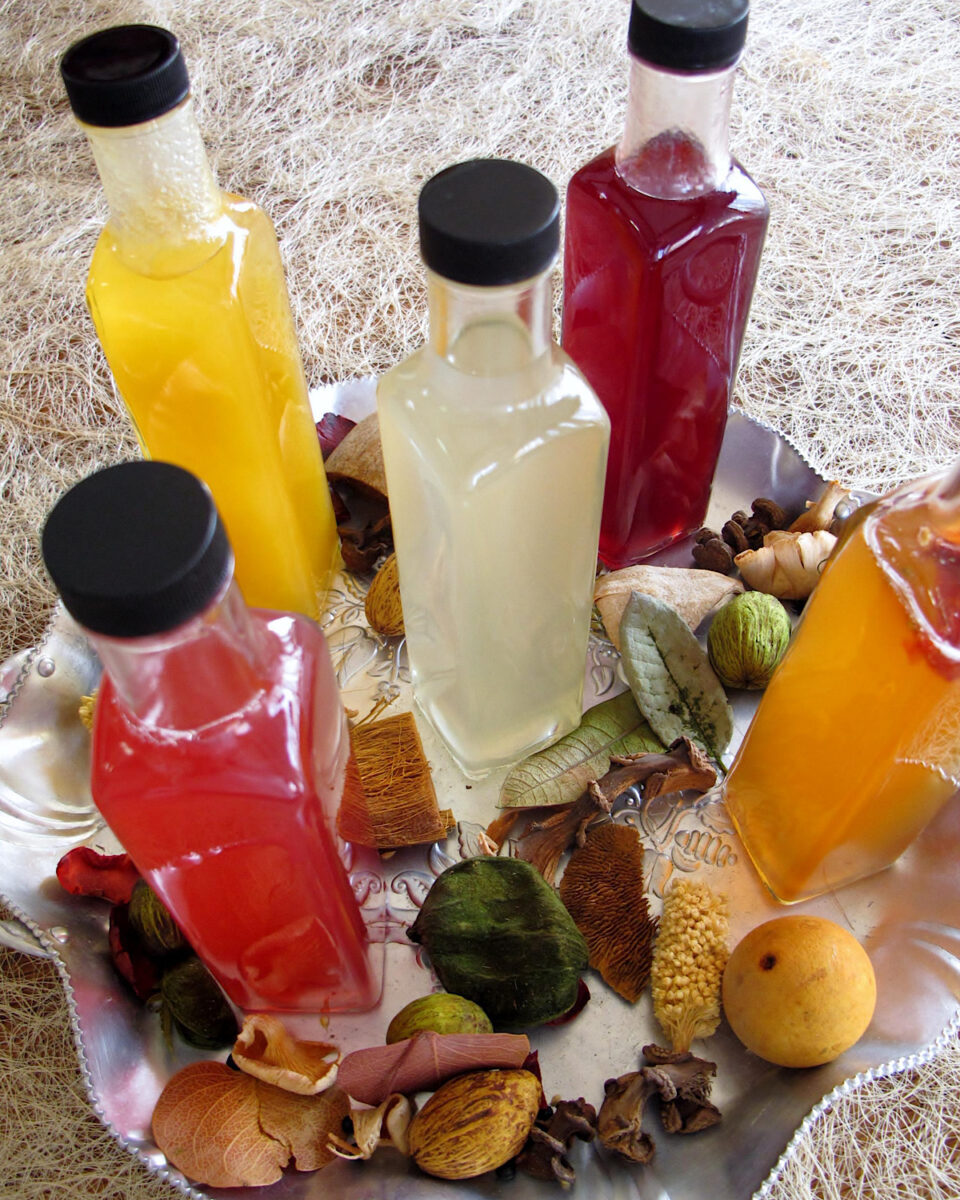
fruit beverage syrups


Now would be an exciting time to work behind the bar, as bartening has evolved  into mixology, and mixing a good cocktail now is far more creative.  I used to pride myself on speed and memory, but those traits are now shadowed by what you can do with flavor and fresh ingredients.  Fortunately, I did retain a flavor memory of the various liqueurs, and now use that memory of flavors to enhance the different fruits in the jams I make.

Some of the beverage syrups in this picture use liqueurs also, but most of them are non-alcoholic so you can mix them with carbonated water.  Ever since I got the SodaStream, which makes carbonated water out of tap water in an instant, I’ve been experimenting with these syrups.

This winter I have been working with sun-dried and smoked tomatoes however, testing all the ways you can use them in food, and a serendipitous product resulted….tomato water.  The smoked tomatoes usually require a 20-minute soak in warm water and are then drained.  The flavor of these smoked and dried tomatoes is so intense that I thought the soaking water must retain a fairly high flavor.  It did.

sun-dried tomato salt


Now, what to do with tomato water?  I’m sure there are many uses, but of course the first that came to my mind is a martini.Especially because I had all of this tomato salt I had made, and thought that would be perfect around the rim.  The tomato salt is 50/50 sun-dried tomatoes and Maldon sea salt.  Lately I’ve been using it on everything, from eggs to chicken to cocktails!


Add a little lime juice and a dash of smoked paprika, garnish with smoked mozzarella and cherry tomatoes, and…


Voila!  

smoked tomato martini

I don’t really drink very many cocktails, especially at home, but I have to say it was a lot of fun greeting my husband as he came in from work with a rimmed martini in hand.  There’s a reason the show Mad Men is so popular.  It felt very chic…not like the baseball cap and dirty hands I usually have from working on the farm.  Here’s the recipe if you want to give it a try:

Smoky Tomato Martini

2 oz. Absolut Peppar Vodka

2 oz. tomato water (water left over from drained sun-dried or smoked tomatoes)

fresh squeezed lime juice (I used a couple of tsp., but flavor to taste)

pinch of smoked paprika

tomato salt for rim

Directions:

1) Combine vodka, tomato water, lime juice and paprika in tumbler with ice

2) Stirred, not shaken (see this post from Jerry James Stone for an interesting article on the difference between shaken and stirred martinis)

3) garnish with cherry tomato, fresh mozzarella balls, and fresh basil

4) Sip and enjoy!

Cheers,

Dorothy

Comments { 3 }

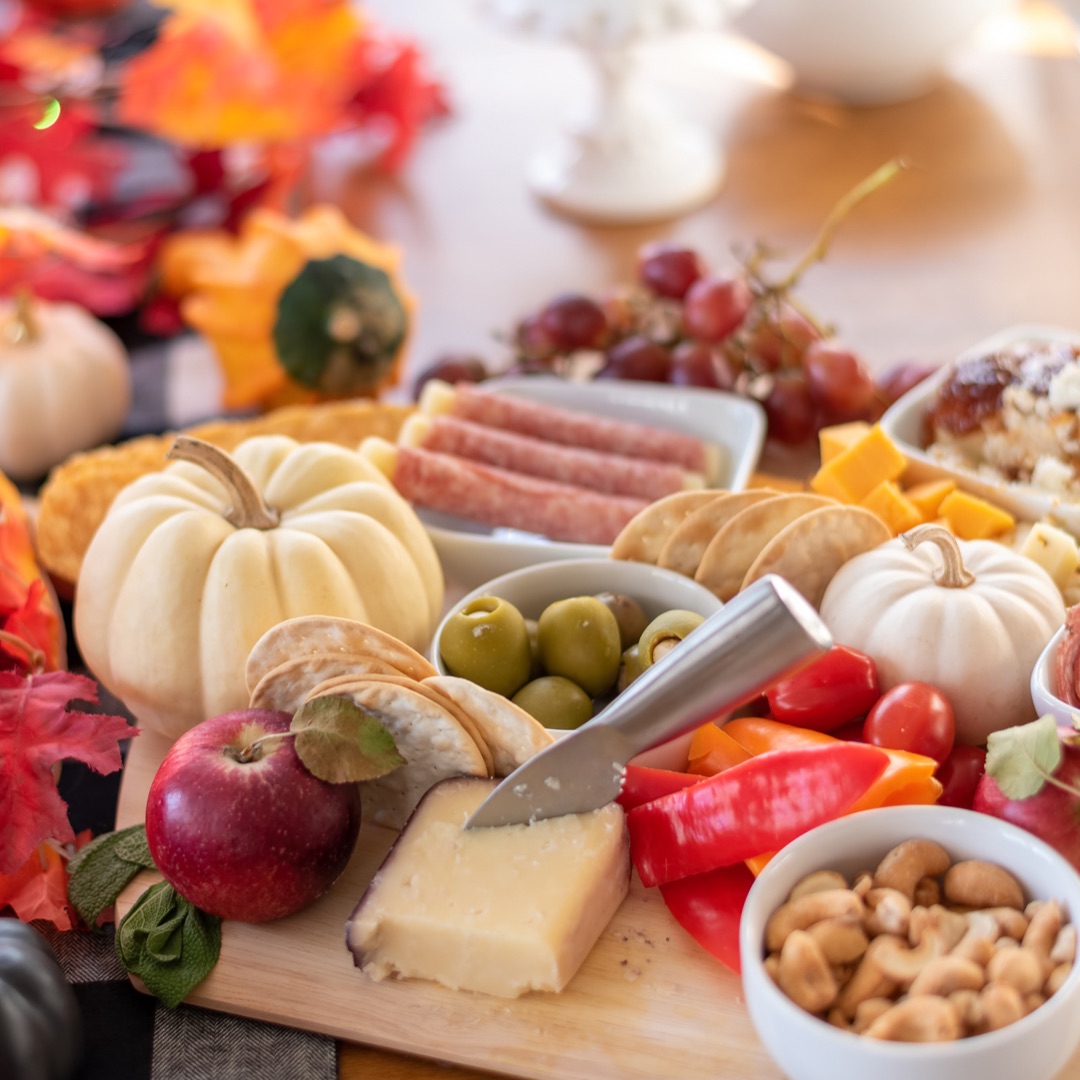
Cheese & Jam Pairings for Easy, but Delicious Appetizer Plates

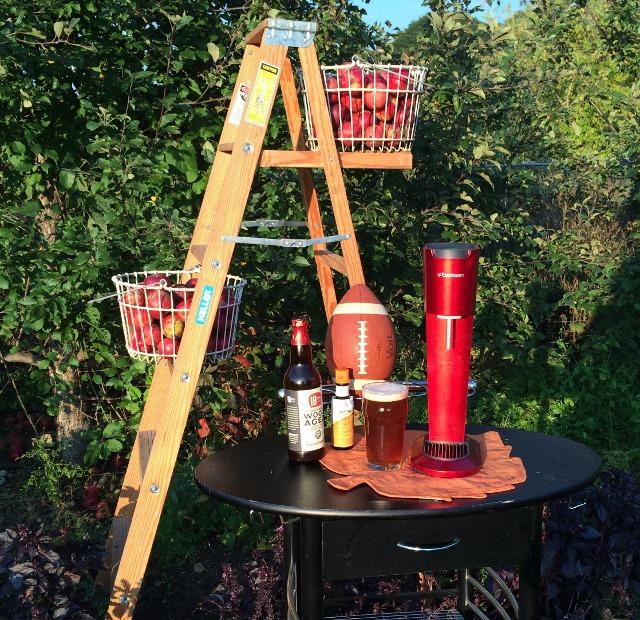
We traditionally have a “smorgasboard” of different appetizer trays for New Years Day during laid back football games (well, laid back for me anyway).   This year for Superbowl I worked on getting the right type of cheese with the perfect pairing of one of our specialty jams and chutneys.  There are quite a few that worked really well, but these were my favorites:


By the way, good beer goes well with these pairing also…thinking Superbowl.  NewCastle Brown Ale is my current favorite.

Disclosure:  I don’t watch football and don’t have a clue who is playing, but I sure like to eat during the festivities.  Go Team!


Comments { 0 }

Plum Amaretto Fruit Butter – Comfort Food Extraordinaire

Fall is a favorite time of the year for so many people.  Here in Minnesota it’s still fall, but you can feel winter nudging fall gently out of the way.   The shorter cooler days always make me anxious to do two things (in this order):   1) get in the kitchen and make steamy pots of something and  2) curl up on the couch with a good book, piping hot tea and some variation of comfort food.

Old-fashioned fruit butter - sheer comfort food

These autumnal urges recently led me to a Harlan Coben novel and Plum Amaretto Butter slathered on some hearty rye bread.  It’s especially comforting to have my favorite things around when hubby is on the road.

Fruit butters are a very old way of preserving the fall fruit harvest and they seem to be a uniquely American preserve, with fruit curds, fruit pastes and the like favored in European countries.  Plum butter might be the exception, as there is a Polish classic spread called powidla sliwkowe which is very similar to a fruit butter and is used on bread, in sauces, and as a glaze on pork or duck.  In general, three things distinguish a fruit butter from jams, jellies, compotes and other fruit preserves.

First is texture.  Fresh fruit is simmered for hours with a little sugar and maybe some juice until it softens enough to puree it.  It is then further simmered with spices and flavorings until it forms into a soft spread with a texture similar to butter (hence the name).

Second is sugar content.  Fruit butters generally have half as much (or less) sugar than a jam.  Jellies and jams need a certain amount of sugar to generate the chemical reaction with acid and pectin needed to form a gel (unless you use a low-sugar pectin or boil the jam for so long that the sugar content ends up being concentrated and actually results in a deceptively high sugar content).

Third is a spice combination.  Most fruit butters are made and eaten in the cool fall and winter months, and they are usually made with rich wintery aromatics like cinnamon, cloves, allspice and nutmeg.  I like to add vanilla beans and I very often will add a little flavorful “substance” like Amaretto, Grand Marnier or maybe Apple Brandy.

Fruit butters are easy to make and easy to modify to your tastes, as they are very forgiving (another difference from a jam or jelly).  Just be warned, they can be very messy, you need to stick around and keep an eye on them so they don’t scorch, and they take quite a bit of fruit (although the fruit can be quite ripe).   Here is a recipe for the plum amaretto butter that I just ran out of….


PLUM AMARETTO FRUIT BUTTER

9 cups plums (prune plums and damson plums are great), pitted and halved

2-3 cups sugar

1/4 -  1/3 cup Amaretto

1 orange, both zest and juice

1 vanilla bean

1 bay leaf

1/2 -1 tsp allspice

1/2 – 1 tsp cinnamon

1/2 tsp salt

  1. Simmer halved plums in oven roaster or on stovetop until soft (some people will use a crock pot which works, but just takes a long time).  If they are dry you can add a little water.
  2. When soft, puree.  I use a stick blender but you could also put them in the processor (messy business though)
  3. Put the puree back in the pot over med-low heat and start adding the sugar, a cup at a time until it is the sweetness that you prefer.  Stir in each cup of sugar until well-blended and taste, keeping in mind the Amaretto will be a little sweet.
  4. Zest the orange into the mix and add the orange juice and the bay leaf and spices.
  5. Simmer the mix over medium heat until it starts to thicken (this usually takes about an hour on the stove, less in the roaster oven because it is spread out over a large surface, and may take several hours in the crock pot).
  6. Adjust spices, sugar and Amaretto as you go.  Taste-adjust-taste-adjust….
  7. This is how you will know it is ready:  take a spoonful of the fruit butter and put it on a clean plate.  Drag your finger through the middle of it and if it doesn’t run back into the groove made by your finger, it is done.  Ladel into jars and either water bath or refrigerate.

Enjoy!  (and tell me your favorite mystery novels…I’m running out of authors).

Dorothy


Comments { 1 }

Concentrated Summer: Dry your own heirloom tomatoes for rich winter tomato sauces …it’s easy!

Oven-Dried vs. Dehydrator?  Heirloom tomatoes vs. Roma tomatoes vs. whatever-you-have-available tomatoes?

With another frost coming and the day length getting shorter, I decided to go out last night and harvest everything in the tomato tunnel that had any color whatsoever.   Although they won’t develop their sugars any further now (since they’ve been harvested), they will color up over the next week.  The visual of a bright red dried tomato is so much more appealing than pale pink or slightly green tomatoes…and I definitely think the taste of food is enhanced by its visuals, don’t you?

So, on to process.  I have done oven-drying, sun-drying and drying with the food dehydrator and for me, the food dehydrator wins hands down.  Oven drying works, but the tomatoes come out quite dark in color and the texture is more difficult to manage.  They will often become way too brittle.  Here is a quick rundown on process tips for both oven-drying and using the dehydrator:

  1. Choose the meatiest tomatoes you can find or you will get a lot of dried tomato skin and they will be much more brittle.  The very best tomato for drying is the Principe Borghese heirloom.  It is a plum-size tomato with a lot of meaty flesh, a lot of bold taste, and just the right size for drying.  Romas and some globe tomatoes are quite meaty and will dry well, but they just don’t have as much taste as the Principe.  Beefsteak tomatoes are usually pretty juicy and are difficult (not impossible) to dry.  Choose those with a high-acid, bold taste.  Now is not the time for the sweet, mild flavor of some tomato varieties.
  2. Adapt your slice and dice to the type of tomato you have.  If it is a plum tomato or a cherry, just cut in half and place them sliced side down on your dehydrator tray or your cookie sheet if oven drying.  If it is a globe tomato, slice the tomato thickly and then cut slices in half (these will shrivel to bite-size. 
  3. Drizzle with oil and salt…or not.  Many people will oil and salt their tomatoes before drying.  I don’t do either because I sell them at market and people have different tastes and needs when it comes to oil and salt.  For home use, I will add the salt to the dish rather than the tomatoes.
  4. Turn on the heat and air.  Dried tomatoes need not only the heat, but also good air circulation.  If drying in an oven, turn the heat on to about 200 degrees and crack open the oven door.  A convection oven works best due to the circulation.  If drying in a food dehydrator, I turn the heat on to 135 degrees for the first 5-10 hours and then decrease it when they have dried to a point where they are almost ready but still a little soft to the touch. 
  5. Timing.  This is hugely variable.  It is going to depend on the type of tomatoes you use and the type of heat/air source you are using.  The only thing for sure is that it takes quite a long time.  I frequently leave my dehydrator on overnight and then finish them off at a lower heat for a few hours in the morning.  You just have to keep checking them the first time you do it to see how your heat source works.  Check every hour or two by feeling them.  Two key factors:  they should end up pliable-not brittle, and they should not have any moistness to the flesh (or they will mold later).
  6. Remove them in stages from the tray/pan.  The tomatoes are all different (just like us) in terms of ripeness, how you cut them, where they lay on the cookie sheet, etc.  You need to remove the ones that are done (to a countertop to cool) and leave the others to finish.
  7. Store.  I store mine in breathable plastic bags.  I know some people will store them in oil in the refrigerator, but my refrigerator is much too full of leftovers, etc. for that and the oil will go rancid if you leave it out.  If you store them in oil, be aware that the oil will get murky in the fridge and them clear up when you get it back to room temp.
  8. Use all winter.  Dried tomatoes can be used in so many delicious ways (I’m sure there are many blogs about this!).  Rehydrate them in warm water, toss them in a tomato sauce to slowly rehydrate, cut them up dried and toss in a salad, or munch on them as-is for a great snack. 

Sally Swift, from the Splendid Table’s How to Eat Weekends blog, had a really interesting way of using dried tomatoes.  I haven’t tried it yet, but I plan to very soon.  She said: “If you need great tomato taste ASAP, chop them into pieces and doctor them with a dash of fish sauce. Taste and add sugar, and maybe even a little vinegar to get the high notes. The fish sauce brings a meaty umph and the sugar and vinegar bring out the highs and lows. ”  Yum, sounds good to me.

Cheers ……….Dorothy


Comments { 2 }

Recipes with Blueberry Bourbon BBQ Sauce

Our farm is overflowing with blueberries!  The six-hundred plants have enjoyed the milder winters of the last couple of years along with the abundance of rain (the rain is more acid than irrigation water and the blueberries love this).

So, our kitchen is bustling with creative ways to use the blueberries.  We’re making blueberry jams, blueberry jellies, blueberry syrups, blueberry shrubs, and now…….Blueberry Bourbon BBQ Sauce


After tinkering with 6-7 recipes online, I’ve come up with one that I personally love and have brought it to market(s).  Here are a couple of recipes that the sauce goes well with.  You could certainly interchange your favorite BBQ sauce with any of these, but I will attest they are wonderful with the Blueberry BBQ Sauce.


 Blueberry Bourbon Glazed Ribs

  • 1 1/2 tsp each of garlic powder, onion powder and black pepper and 1 1/2 Tbsp kosher salt (or use your own favorite rub)
  • 4 lb. meaty baby back ribs or 2-3 lbs boneless country-style ribs
  • Blueberry Bourbon BBQ Sauce

Directions:

  1. Preheat oven to 325 degrees & position racks in upper and lower third of oven
  2. In small bowl, whisk together garlic powder, onion powder, pepper and salt.  Set ribs on rimmed baking sheets and rub with the spice rub.
  3. Cover with foil and roast for 1 1/2 hours, until tender, switching pans halfway through.  Remove ribs from oven and pour off the liquid in the pans
  4. Increase heat to 375 degrees (can also use broil).  Working with one sheet of ribs at a time, brush the underside of each rack with some glaze and bake or broil until browned.  Flip the ribs and repeat on the other side.  Transfer baking sheet to bottom shelf of oven.  Repeat with remaining ribs.
  5. Transfer ribs to work surface and slice between the bones. Mound the ribs on a platter and pass the remaining glaze at the table
  6. Serve with a rich berry-scented red wine.

 Grilled Steaks with Blueberry Bourbon BBQ Sauce

    • T. chopped fresh thyme
    • 1 Tbsp. extra-virgin olive oil
    • 3/4 tsp. kosher salt
    • 1/2 tsp coarsely ground pepper
    • 1 pound steak (like filet mignon), 1 1/2 to 2 inches thick, trimmed and cut into 4 portions


Directions:

  1. Preheat grill to high
  2. Combine thyme, oil, salt and pepper in small bowl.  Rub mixture on all sides of steaks.  Grill the steaks 3-5 min. per side for medium-rare.  Let steaks rest for 5 minutes before serving with the sauce on the side.

Grilled Salmon with Blueberry BBQ Sauce

    • 4 (6-oz) salmon steaks
    • 2 Tbsp. olive oil
    • sea salt, to taste
    • ground black pepper, to taste


Directions:

  1. Preheat grill or broiler to medium high heat
  2. Brush salmon with oil, and season to taste with salt and pepper.
  3.  Grill or broil until the fish flakes easily with a fork, about 3 to 4 minutes per side.
  4. Serve with blueberry sauce.
Comments { 2 }
UA-22658354-1