Far to Jar
This blog is about a) making delicious, easy, gourmet food using preserves as enhancement, b) equipment and processes used in canning, and c) life on a small berry farm where most of the berries are made into delectable jams and jellies and sold at farmers markets.
About Farm to Jar BlogAbout Farm to Jar BlogFarmingCanning tips and tricksShop online at HeathglenContact Us
February 21st, 2012

Top 9 Food Podcasts that I Listen to Without Fail

by dorothy stainbrook
iron chef photo

Podcasts can help you dream of big things

When I first started farming I became enthralled with (and addicted to) farm auctions.  I brought home so much junk during that period of my life that my husband came close to starting a big, and secretive, bonfire.  Fortunately that phase ended and most of the stuff has been sold (or burned).

As the farm and the business grew, I became more and more interested in marketing.  I mean what good is it to have a great product, if no one really knows about it.  Working on a pretty tight budget, I decided the time was right to try and understand technology and the associated marketing avenues.   But where to start?  I didn’t grow up with technology and could barely text message.  After getting an ipod nano for a gift, my kids introduced me to itunes.  Holy Cow, what a gift that has been.  I discovered there were wonderful podcasts out there where truly knowledgeable, experienced people would teach you anything you desired…and for free!

I quickly became addicted and immersed myself in technology and business podcasts to try and learn about blogging and the technology and marketing world in general.  It was like going to college….for free!  I have learned so much about blogging, photography, marketing, and yes, food.  I was plugged in to my headphones constantly…during pilates, at Target, at home and in the car.  It was a little embarrassing actually, but when you’ve got an addictive personality, you get over embarrassing things pretty quickly.

So, after two years of this immersion into the podcast world, I have developed favorites in each subject.  Since this blog surrounds food, I thought I’d share my favorite food podcasts.  Maybe another day I can talk about the business podcasts.  Those were a godsend for the tech-neaderthal that I was.  I tell my kids I am now “tech-saavy”.  They don’t buy it, but they have to admit I have progressed.  Anyway, here are my favorite food podcasts.  They cover the range of food-related topics, from recipes, to history, to chef interviews, to science, to health.  Enjoy!  And get yourself a nano if you don’t have one.  They’re indestructible.

FAVORITE FOOD-THEMED PODCASTS:

Weekly Dish Podcast

Weekly Dish;  For me, this is the best information on what is happening in the local twin cities food scene.  The two Stephanies, one a food editor of the Minnesota Monthly magazine and one an avowed foodie and radio personality, are fun, knowledgeable and  full of inside information on local chefs, local restaurants, local farms, and markets. They also go beyond the chef interviews and interview the whole gambit of local food people, from butcher to baker to ….well I guess not candlestick makers yet.  Oh, and they give out great recipes.


Splendid Table with Lynne Rossetto Kasper


Splendid Table:  Want to spend a Saturday afternoon with a warm, experienced Italian chef and cookbook author that will answer your questions in depth and share her vast array of food knowledge in a way that makes you want to be her best friend?  I’m sure I don’t need to introduce Lynne Rossetto Kasper to you, but in case you miss any of her NPR radio shows…podcast it!  Lynne Rossetto Kasper is an icon in the food world and I feel so fortunate that she lives in Minnesota and I am able to talk with her at the St. Paul Farmers’ Market in the summers.


Stacy Pearl of Mouth of Wonder

Mouth of Wonder:  Stacy Pearl, originally from Brooklyn, New York,  has a diverse history as an artist, a caterer, a restauranteur, a private chef to the rich and famous and a radio host.  She now lives in Santa Fe New Mexico and her show gives me a feel of an area not necessarily known for it’s food and wine.  Her show is hilarious and she does a very good satire of herself as a New York Jewish socialite in a call-in segment called “ask Rula”.   She never fails to give out detailed recipes for food that will make your mouth water.  While very witty, funny and smart, Stacy Pearl doesn’t have that sharp edge that many expect from New Yorkers.  Her show is great fun and fun is a great way to learn in my mind.


KCRW Good Food:  This LA-based food-themed show is hosted by Evan Klieman.  Even though there is a live local farmer’s market report each week and local restaurants are reviewed, there is a lot of information that is much broader than California and keeps me up on current food trends.  I always learn something from this show, and it is interesting to hear about the plethora of fruit and vegetables that are available fresh in Southern California and how they are prepared.


KSRO Good Food Hour

KSRO Good Food Hour:  Another California-based show, this time from Sonoma County.  Chef John Ash and radio personality Steve Garner have been hosting this show together since 1987.  It is a very relaxed show and is focused on the “stories” of and by people in the food world.  Chef Ash and Steve Garner frequently  interview people at an outdoor festival or event and they have a really nice easy-going interview style.  Chef John Ash is an internationally recognized chef and while his humility is refreshing, his food knowledge and recipes garner respect right away.


Cooking Issues with Dave Arnold

Cooking Issues with Dave Arnold

Cooking Issues:  This is not a casual show for the home cook by any means, but it is certainly entertaining.  Dave Arnold, a technology and science wizard, is the host of this show, recorded in semi-shed behind a pizza place in Brooklyn, New York.  Arnold, who is a brother in law to Wylie Dufresne, is an edgy, smart, don’t-bore-me-with-anything-stupid-or-I-will-use-my-scathing-wit-to-bring-you-to-your-knees kind of guy.  I don’t understand half of the things he talks about, but there is always something fascinating that I have to listen to several times over with pen and paper in hand.  Arnold is the Director of Culinary Technology of The French Culinary Institute at The International Culinary Center and an award winning food writer.  This show is really designed for chefs and technique nerds, but I love it and wouldn’t miss it.

Let's Get Real with Erica Wides

Let's Get Real with Erica Wides

Let’s Get Real:  Erica Wides, another Culinary Institute instructor from Brooklyn, New York, hosts this show on the Heritage Radio Network.  She is sarcastic, witty and knowledgeable (must be a New York kind of thing).  Her focus on this show is to help people understand the difference between finding and preparing “real” food vs. being caught up in what she calls “foodiness”   She tries to take the “whole-foods lifestyle” out of the realm of the food elite, and educate the general public on how to tell real food from processed food.  Her style is to get to the research by telling stories.  No recipes here, just an opinionated analysis of what processed food is all about, and the knowledge to back it up, always with the goal of making the preparation of real food inexpensive and easy.


Food and Wine with Chef Jamie Gwen

Food and Wine with Chef Jamie Gwen

Food and Wine with Chef Jamie Gwen:  Chef Jamie Gwen is a highly articulate business-woman who is also an acclaimed chef and frequently co-hosts with Martha Stewart.  Because this show is 2 hours, Chef Jamie can delve into food and wine in more depth than some of  the others.  It is not the laid back ambiance of the other California shows, nor is it the sarcastic, edgy New York type of show.  This show is very polished and entertainment-industry focused, but there is a heck of a lot of food information and good recipes here.  There are many recipes for high-end dishes on this show, many of them from highly acclaimed chefs.  There are also a lot of interesting interviews with chefs on this show, and there is always a good segment on wine.


Taste Matters with Mitchell Davis

Taste Matters with Mitchell Davis

Taste Matters:  This is a fairly new show for me, but it promises to be quite different than the others.  The host is Mitchell Davis, Vice President of the James Beard Foundation, cookbook author, and restaurant reviewer.  Mr. Davis explores topics that center on “taste” rather than food.  Do women taste things differently than men for example.  He interviews some really interesting people and I am excited to learn about some of the  nuances of taste, as well as some of the social and psychological aspects of taste.  This show promises to examine personal tastes and collective tastes, biological tastes and acquired tastes, good tastes and bad tastes.  Sounds interesting to me.


Well there you have it.  I’m sure there are different “tastes” on what kind of food shows you like to listen to.  This collection of podcasts that I listen to gives me a breadth of personality and information that I can’t believe I can access so easily.  It’s kind of an amazing world we’re living in right now.  Enjoy!

Leave me a comment on some of your favorites if you listen to this kind of show.  I couldn’t get the top 10, only the top 9.  What should the 10th one be?

Cheers,

Dorothy

February 17th, 2012

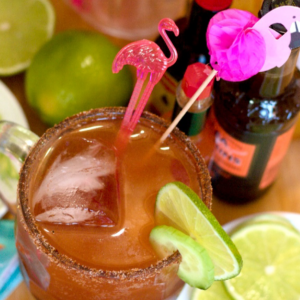
Smoked Tomato Martini Recipe – rimmed with sun-dried tomato salt

by dorothy stainbrook

Bartending in Portland Oregon got me through graduate school and I do believe I’ve used those bartending skills more in post-college life than the skill set of  my urban planning degree (especially if you include the people skills you pick up while bartending).

fruit beverage syrups


Now would be an exciting time to work behind the bar, as bartening has evolved  into mixology, and mixing a good cocktail now is far more creative.  I used to pride myself on speed and memory, but those traits are now shadowed by what you can do with flavor and fresh ingredients.  Fortunately, I did retain a flavor memory of the various liqueurs, and now use that memory of flavors to enhance the different fruits in the jams I make.

Some of the beverage syrups in this picture use liqueurs also, but most of them are non-alcoholic so you can mix them with carbonated water.  Ever since I got the SodaStream, which makes carbonated water out of tap water in an instant, I’ve been experimenting with these syrups.

This winter I have been working with sun-dried and smoked tomatoes however, testing all the ways you can use them in food, and a serendipitous product resulted….tomato water.  The smoked tomatoes usually require a 20-minute soak in warm water and are then drained.  The flavor of these smoked and dried tomatoes is so intense that I thought the soaking water must retain a fairly high flavor.  It did.

sun-dried tomato salt


Now, what to do with tomato water?  I’m sure there are many uses, but of course the first that came to my mind is a martini.Especially because I had all of this tomato salt I had made, and thought that would be perfect around the rim.  The tomato salt is 50/50 sun-dried tomatoes and Maldon sea salt.  Lately I’ve been using it on everything, from eggs to chicken to cocktails!


Add a little lime juice and a dash of smoked paprika, garnish with smoked mozzarella and cherry tomatoes, and…


Voila!  

smoked tomato martini

I don’t really drink very many cocktails, especially at home, but I have to say it was a lot of fun greeting my husband as he came in from work with a rimmed martini in hand.  There’s a reason the show Mad Men is so popular.  It felt very chic…not like the baseball cap and dirty hands I usually have from working on the farm.  Here’s the recipe if you want to give it a try:

Smoky Tomato Martini

2 oz. Absolut Peppar Vodka

2 oz. tomato water (water left over from drained sun-dried or smoked tomatoes)

fresh squeezed lime juice (I used a couple of tsp., but flavor to taste)

pinch of smoked paprika

tomato salt for rim

Directions:

1) Combine vodka, tomato water, lime juice and paprika in tumbler with ice

2) Stirred, not shaken (see this post from Jerry James Stone for an interesting article on the difference between shaken and stirred martinis)

3) garnish with cherry tomato, fresh mozzarella balls, and fresh basil

4) Sip and enjoy!

Cheers,

Dorothy

February 11th, 2012

Sharpening knives for the home cook: sharpening steel vs. manual sharpener

by dorothy stainbrook

When a good cook finds a knife that works well with their own hands for their individual cooking purposes, it is a beautiful thing.  Those knives are cherished and cared for.  Never placed in the dishwasher and always kept sharp.  Or at least that is the goal.  Sharpening can be a bit elusive at times for the home cook.  These are my own favorite knives, and below I’ll share my personal findings on how best to sharpen the home cook’s knives.

My favorite Chef's knives


 Favorite Chef’s Knives:

a) the knife on the far left is a Cutco knife and the most expensive one I own.  It is very comfortable to hold and is a bit heavier than the Henckel.  The weight is nicer when cutting with the tip left on the board (i.e., for garlic). This is generally my “go-to” knife for most cooking tasks;

b) the Henckel is next to the Cutco and it is also really comfortable but quite a bit lighter.  I use this one when I’m chopping a large amount of produce and don’t want to wear out my wrist (i.e., for stir fry);

c) the knife on the far right is one that I purchased at a garage sale for $1.00 and I have come to love it for certain tasks.  It is a stainless steel Japanese knife called “Old Homestead” and it is great for cutting pizza, squash and anything larger or bulky.  The wood handle is not too comfortable, but the length and depth of the knife makes it great for the big cuts.


Boning Knife

Favorite Knife for Making Marmalades and Jams:

This is a boning knife that I have had for ages, but the size and style of this knife are just right for slicing citrus peels, taking pith off, and slicing small soft fruit.  It works far better for me than a paring knife or anything else I have tried.


Favorite Specialty Knife (actually this is a cleaver):

My pumpkin cleaver


I love this old cleaver that I picked up at a garage sale.  I always had trouble cutting through large winter squash and pumpkins for the fruit butters until I found this big guy.  I also just love the look of it, and the thoughts of its past history whenever I use it.  It makes me feel a little connected to some old Italian butcher with gnarly hands and chickens running around outside.


Sharpening Knives

With a Sharpening Steel:  I’ve always been a bit mystified at how quickly and efficiently chefs sharpen their knives with a sharpening steel.  I know the value of a consistently sharp knife in the kitchen, but knowing the correct angle and bevel for each particular knife and deftly achieving that angle with a sharpening steel, has always been a bit of an elusive holy grail for me.

My cooking/science guru Dave Arnold explained the process in a way that made sense in his 2/5/12 podcast at Cooking Issues.  He went into quite a bit of detail for sharpening Japanese Knives, Western knives and hybrid knives, and I thought I’d try the process for Western knives on my own knives.  The question is:  For the home cook, is this process really that much better than the very straightforward use of a good manual sharpener?

marking the manufacturer's bevel


Here’s a summary of my non-scientific test using information I gleaned from Dave Arnold’s podcast:

1) Mark the manufacturer’s bevel:  A traditional Western knife has an identical bevel on both sides.  This would be considered a 50/50 percentage bevel.  The trick is to get the angle right when using a steel.  First, mark the edge of the blade with a sharpie on both sides of the knife.


Sharpening with a Steel

2) Take the knife gently, but firmly across the steel/stone until you see that the sharpie marking is worn away flat and evenly down the blade.


3) When the sharpie is worn down evenly flat across the blade, you have achieved the same angle as the manufacturer had.


*Notes:  Dave Arnold explains that the bigger the angle, the less fragile the blade but the duller the knife is.  He notes that 17 degrees is common for newer knives and 30 degrees for older knives.


Chef's choice 450 Manual Sharpener


Sharpening Knives with a good manual sharpener:

While the use of the sharpening steel was much clearer to me now, I still wondered if it was that much better than just using a manual sharpener (for the home cook’s purposes anyway)?  Yes, it looks really cool to see chef’s expertly sharpening their knives, but was the benefit in sharpness worth the room for error?  I had done a little research over Christmas on finding the best manual sharpener, and ended up getting the chefs choice 450.


We used this manual sharpener on some of the knives and tried to compare.  This was a pretty simplistic and subjective comparison, but that’s what we are here at home…simple.


manual sharpening results


Results:

The Chef’s Choice 450 gave great results and was easier for the home cook to use with confidence.  I’m sure with practice, the sharpening steel is more accurate (and more fun), but for me the confidence that I was at least getting a similar and sharp angle on both sides, and the luxury of not having to think about it, was worth it.  I love my knives, and I love working with sharp knives, but for now I’ll just watch the chef’s sharpen their knives on TV and secretly sharpen my own with the manual sharpener.

February 3rd, 2012

Cheese & Jam Pairings for Easy, but Delicious Appetizer Plates

by dorothy stainbrook

We traditionally have a “smorgasboard” of different appetizer trays for New Years Day during laid back football games (well, laid back for me anyway).   This year for Superbowl I worked on getting the right type of cheese with the perfect pairing of one of our specialty jams and chutneys.  There are quite a few that worked really well, but these were my favorites:


By the way, good beer goes well with these pairing also…thinking Superbowl.  NewCastle Brown Ale is my current favorite.

Disclosure:  I don’t watch football and don’t have a clue who is playing, but I sure like to eat during the festivities.  Go Team!


November 3rd, 2011

Plum Amaretto Fruit Butter – Comfort Food Extraordinaire

by dorothy stainbrook

Fall is a favorite time of the year for so many people.  Here in Minnesota it’s still fall, but you can feel winter nudging fall gently out of the way.   The shorter cooler days always make me anxious to do two things (in this order):   1) get in the kitchen and make steamy pots of something and  2) curl up on the couch with a good book, piping hot tea and some variation of comfort food.

Old-fashioned fruit butter - sheer comfort food

These autumnal urges recently led me to a Harlan Coben novel and Plum Amaretto Butter slathered on some hearty rye bread.  It’s especially comforting to have my favorite things around when hubby is on the road.

Fruit butters are a very old way of preserving the fall fruit harvest and they seem to be a uniquely American preserve, with fruit curds, fruit pastes and the like favored in European countries.  Plum butter might be the exception, as there is a Polish classic spread called powidla sliwkowe which is very similar to a fruit butter and is used on bread, in sauces, and as a glaze on pork or duck.  In general, three things distinguish a fruit butter from jams, jellies, compotes and other fruit preserves.

First is texture.  Fresh fruit is simmered for hours with a little sugar and maybe some juice until it softens enough to puree it.  It is then further simmered with spices and flavorings until it forms into a soft spread with a texture similar to butter (hence the name).

Second is sugar content.  Fruit butters generally have half as much (or less) sugar than a jam.  Jellies and jams need a certain amount of sugar to generate the chemical reaction with acid and pectin needed to form a gel (unless you use a low-sugar pectin or boil the jam for so long that the sugar content ends up being concentrated and actually results in a deceptively high sugar content).

Third is a spice combination.  Most fruit butters are made and eaten in the cool fall and winter months, and they are usually made with rich wintery aromatics like cinnamon, cloves, allspice and nutmeg.  I like to add vanilla beans and I very often will add a little flavorful “substance” like Amaretto, Grand Marnier or maybe Apple Brandy.

Fruit butters are easy to make and easy to modify to your tastes, as they are very forgiving (another difference from a jam or jelly).  Just be warned, they can be very messy, you need to stick around and keep an eye on them so they don’t scorch, and they take quite a bit of fruit (although the fruit can be quite ripe).   Here is a recipe for the plum amaretto butter that I just ran out of….


PLUM AMARETTO FRUIT BUTTER

9 cups plums (prune plums and damson plums are great), pitted and halved

2-3 cups sugar

1/4 -  1/3 cup Amaretto

1 orange, both zest and juice

1 vanilla bean

1 bay leaf

1/2 -1 tsp allspice

1/2 – 1 tsp cinnamon

1/2 tsp salt

  1. Simmer halved plums in oven roaster or on stovetop until soft (some people will use a crock pot which works, but just takes a long time).  If they are dry you can add a little water.
  2. When soft, puree.  I use a stick blender but you could also put them in the processor (messy business though)
  3. Put the puree back in the pot over med-low heat and start adding the sugar, a cup at a time until it is the sweetness that you prefer.  Stir in each cup of sugar until well-blended and taste, keeping in mind the Amaretto will be a little sweet.
  4. Zest the orange into the mix and add the orange juice and the bay leaf and spices.
  5. Simmer the mix over medium heat until it starts to thicken (this usually takes about an hour on the stove, less in the roaster oven because it is spread out over a large surface, and may take several hours in the crock pot).
  6. Adjust spices, sugar and Amaretto as you go.  Taste-adjust-taste-adjust….
  7. This is how you will know it is ready:  take a spoonful of the fruit butter and put it on a clean plate.  Drag your finger through the middle of it and if it doesn’t run back into the groove made by your finger, it is done.  Ladel into jars and either water bath or refrigerate.

Enjoy!  (and tell me your favorite mystery novels…I’m running out of authors).

Dorothy


October 20th, 2011

Concentrated Summer: Dry your own heirloom tomatoes for rich winter tomato sauces …it’s easy!

by dorothy stainbrook

Oven-Dried vs. Dehydrator?  Heirloom tomatoes vs. Roma tomatoes vs. whatever-you-have-available tomatoes?

With another frost coming and the day length getting shorter, I decided to go out last night and harvest everything in the tomato tunnel that had any color whatsoever.   Although they won’t develop their sugars any further now (since they’ve been harvested), they will color up over the next week.  The visual of a bright red dried tomato is so much more appealing than pale pink or slightly green tomatoes…and I definitely think the taste of food is enhanced by its visuals, don’t you?

So, on to process.  I have done oven-drying, sun-drying and drying with the food dehydrator and for me, the food dehydrator wins hands down.  Oven drying works, but the tomatoes come out quite dark in color and the texture is more difficult to manage.  They will often become way too brittle.  Here is a quick rundown on process tips for both oven-drying and using the dehydrator:

  1. Choose the meatiest tomatoes you can find or you will get a lot of dried tomato skin and they will be much more brittle.  The very best tomato for drying is the Principe Borghese heirloom.  It is a plum-size tomato with a lot of meaty flesh, a lot of bold taste, and just the right size for drying.  Romas and some globe tomatoes are quite meaty and will dry well, but they just don’t have as much taste as the Principe.  Beefsteak tomatoes are usually pretty juicy and are difficult (not impossible) to dry.  Choose those with a high-acid, bold taste.  Now is not the time for the sweet, mild flavor of some tomato varieties.
  2. Adapt your slice and dice to the type of tomato you have.  If it is a plum tomato or a cherry, just cut in half and place them sliced side down on your dehydrator tray or your cookie sheet if oven drying.  If it is a globe tomato, slice the tomato thickly and then cut slices in half (these will shrivel to bite-size. 
  3. Drizzle with oil and salt…or not.  Many people will oil and salt their tomatoes before drying.  I don’t do either because I sell them at market and people have different tastes and needs when it comes to oil and salt.  For home use, I will add the salt to the dish rather than the tomatoes.
  4. Turn on the heat and air.  Dried tomatoes need not only the heat, but also good air circulation.  If drying in an oven, turn the heat on to about 200 degrees and crack open the oven door.  A convection oven works best due to the circulation.  If drying in a food dehydrator, I turn the heat on to 135 degrees for the first 5-10 hours and then decrease it when they have dried to a point where they are almost ready but still a little soft to the touch. 
  5. Timing.  This is hugely variable.  It is going to depend on the type of tomatoes you use and the type of heat/air source you are using.  The only thing for sure is that it takes quite a long time.  I frequently leave my dehydrator on overnight and then finish them off at a lower heat for a few hours in the morning.  You just have to keep checking them the first time you do it to see how your heat source works.  Check every hour or two by feeling them.  Two key factors:  they should end up pliable-not brittle, and they should not have any moistness to the flesh (or they will mold later).
  6. Remove them in stages from the tray/pan.  The tomatoes are all different (just like us) in terms of ripeness, how you cut them, where they lay on the cookie sheet, etc.  You need to remove the ones that are done (to a countertop to cool) and leave the others to finish.
  7. Store.  I store mine in breathable plastic bags.  I know some people will store them in oil in the refrigerator, but my refrigerator is much too full of leftovers, etc. for that and the oil will go rancid if you leave it out.  If you store them in oil, be aware that the oil will get murky in the fridge and them clear up when you get it back to room temp.
  8. Use all winter.  Dried tomatoes can be used in so many delicious ways (I’m sure there are many blogs about this!).  Rehydrate them in warm water, toss them in a tomato sauce to slowly rehydrate, cut them up dried and toss in a salad, or munch on them as-is for a great snack. 

Sally Swift, from the Splendid Table’s How to Eat Weekends blog, had a really interesting way of using dried tomatoes.  I haven’t tried it yet, but I plan to very soon.  She said: “If you need great tomato taste ASAP, chop them into pieces and doctor them with a dash of fish sauce. Taste and add sugar, and maybe even a little vinegar to get the high notes. The fish sauce brings a meaty umph and the sugar and vinegar bring out the highs and lows. ”  Yum, sounds good to me.

Cheers ……….Dorothy


August 4th, 2011

Recipes with Blueberry Bourbon BBQ Sauce

by dorothy stainbrook

Our farm is overflowing with blueberries!  The six-hundred plants have enjoyed the milder winters of the last couple of years along with the abundance of rain (the rain is more acid than irrigation water and the blueberries love this).

So, our kitchen is bustling with creative ways to use the blueberries.  We’re making blueberry jams, blueberry jellies, blueberry syrups, blueberry shrubs, and now…….Blueberry Bourbon BBQ Sauce


After tinkering with 6-7 recipes online, I’ve come up with one that I personally love and have brought it to market(s).  Here are a couple of recipes that the sauce goes well with.  You could certainly interchange your favorite BBQ sauce with any of these, but I will attest they are wonderful with the Blueberry BBQ Sauce.


 Blueberry Bourbon Glazed Ribs

  • 1 1/2 tsp each of garlic powder, onion powder and black pepper and 1 1/2 Tbsp kosher salt (or use your own favorite rub)
  • 4 lb. meaty baby back ribs or 2-3 lbs boneless country-style ribs
  • Blueberry Bourbon BBQ Sauce

Directions:

  1. Preheat oven to 325 degrees & position racks in upper and lower third of oven
  2. In small bowl, whisk together garlic powder, onion powder, pepper and salt.  Set ribs on rimmed baking sheets and rub with the spice rub.
  3. Cover with foil and roast for 1 1/2 hours, until tender, switching pans halfway through.  Remove ribs from oven and pour off the liquid in the pans
  4. Increase heat to 375 degrees (can also use broil).  Working with one sheet of ribs at a time, brush the underside of each rack with some glaze and bake or broil until browned.  Flip the ribs and repeat on the other side.  Transfer baking sheet to bottom shelf of oven.  Repeat with remaining ribs.
  5. Transfer ribs to work surface and slice between the bones. Mound the ribs on a platter and pass the remaining glaze at the table
  6. Serve with a rich berry-scented red wine.

 Grilled Steaks with Blueberry Bourbon BBQ Sauce

    • T. chopped fresh thyme
    • 1 Tbsp. extra-virgin olive oil
    • 3/4 tsp. kosher salt
    • 1/2 tsp coarsely ground pepper
    • 1 pound steak (like filet mignon), 1 1/2 to 2 inches thick, trimmed and cut into 4 portions


Directions:

  1. Preheat grill to high
  2. Combine thyme, oil, salt and pepper in small bowl.  Rub mixture on all sides of steaks.  Grill the steaks 3-5 min. per side for medium-rare.  Let steaks rest for 5 minutes before serving with the sauce on the side.

Grilled Salmon with Blueberry BBQ Sauce

    • 4 (6-oz) salmon steaks
    • 2 Tbsp. olive oil
    • sea salt, to taste
    • ground black pepper, to taste


Directions:

  1. Preheat grill or broiler to medium high heat
  2. Brush salmon with oil, and season to taste with salt and pepper.
  3.  Grill or broil until the fish flakes easily with a fork, about 3 to 4 minutes per side.
  4. Serve with blueberry sauce.
August 4th, 2011

Making Fruit Syrups & Shrubs for Refreshing Summer Drinks & Cocktails

by dorothy stainbrook


Our farm is small (23 acres), but it is amazing the amount of small fruit that you can grow on that amount of land. We started with blueberries 12 years ago, and have been adding various new fruits every year. Some have not worked out too well (kiwis, saskatoons, blackberries), but what we grow now through survival of the fittest includes currants, raspberries, strawberries, blueberries, elderberries, chokecherries, gooseberries, sour cherries, rhubarb, and heirloom tomatoes.

I love, love fruit and love working with fruit. There is so much versatility in what you can do with fruit — I sometimes feel as if I’m racing against time to try all of the ideas I run across or dream up. I wondered the other day if the term “creative Juices” originated from someone who was working with fruit?

Anyway, the obsession with this year’s fruit is making beverage syrups. I got one of those wonderful SodaStream Genesis makers that are so popular in Europe and started adding fruit syrups to the carbonated water it makes. Made me feel ever so tres chic I must admit, but it happened to be incredibly good also. Stepping it up a notch from carbonated water and into the cocktail realm was even better. My cocktails of choice for the syrups include champagne cocktails & mojitos . If you’re into the mixology scene you can go wild with imaginative drinks. For me, my soda stream, a lemonade, iced tea, and an occasional “Blueberry Rumba” is making this hot, humid summer bearable.

One other interesting drink that’s surprisingly refreshing is an old-fashioned “berry shrub”. A shrub is essentially a fruit syrup drink with vinegar added. Sound weird? It was a very popular drink in the colonial era when refrigeration wasn’t available and vinegar could act as a preservative. It also provided the acidity to a drink when fresh citrus wasn’t available and offered the taste of summer in those bleak winters. The fruit and sugar really mellow out the vinegar taste and it’s really quite wonderful.

Here are the recipes for Blueberry Syrup and Blueberry Shrub followed by some drink recipes of how to use them:

Blueberry Tarragon Syrup:

juicing the berries


1) Juice the blueberries by simmering in a large pot over med-low heat with 1/4 cup water until they are soft and the juices run (about 15 min.).  You’ll get about 1 cup of juice for every 2 cups berries

straining the juice

2) Strain the juice through cheesecloth or a jelly bag.  A piece of nylon tulle placed in a strainer works as well as cheesecloth and doesn’t take as long. If you want the juice to be perfectly clear (as you would for a jelly), don’t push the pulp through the strainer. I don’t think clarity matters with a syrup, so I would push as much juice through the strainer as possible to get the maximum juice from your berries. (in our kitchen we use a commercial juicer that we ordered from Sweden)

3) Measure the juice and for every cup of juice measure equal amounts of cups of pure cane sugar. Many syrup companies use corn syrup as a thickener. You don’t need a thick syrup for beverages. If you want to make a thick pancake syrup, you can add a little pectin when you boil it up.

*note: commercial pectin is not an unhealthy additive; it is only dried citrus rind/pith or apple, standardized by testing the rind and adding enough sugar to the pectin so it works the same each application. Much worse to add corn syrup in my mind.

infusing the herbs


4)  Tie some sprigs of fresh tarragon (mint is also good) in a cheesecloth bag (around a cup of tarragon for every 4-6 cups of juice). Pour the juice into a large pot and add the bag of tarragon. Bring to a boil, then cover the pot, turn off the heat and let the tarragon infuse into the juice for about 20 minutes.

add to sparkling water and enjoy!


5) Remove the tarragon, add the sugar to the pot and bring to a boil, slowly, making sure all of the sugar is dissolved.  I usually add some fresh squeezed lemon or lime juice at this point, but it is optional.  Bring to a rolling boil (a boil that cannot be stirred down), and boil for about 2 minutes.

6) Ladle into jars or bottles using a funnel; let cool and then refrigerate.  Stir in, to taste, to your favorite beverages


Basic Berry Shrub Recipe:

Combine 1 part apple cider vinegar, and 1 part pure cane sugar to 2 parts berries (or any kind of fruit). Bring ingredients to a boil. Stir. Reduce heat and simmer for 10 minutes. Strain into a glass bottle. This is the quick way to make a shrub syrup. When we make them for market we let the berries steep in the vinegar in the refrigerator for 3 days, strain, add sugar and boil. It’s a little more complex that way, but the quick way is fine.

Adding to carbonated water, lemonade, sparkling wine drinks:

 
The question I always get at markets is how much to use, and well……that depends really on how sweet you like your drink, which berry syrup you’re using, and what kind of drink you’re flavoring. With a glass of lemonade or sparkling wine I would probably add 2-3 Tablespoons of the Blueberry Tarragon Syrup. In carbonated water or mineral water I might add more to get a higher flavor profile.

By the way, these syrups are also great drizzled over fruit salads, pound cake, ice cream, or used with vinegar in a salad dressing. OK, here’s the cocktail recipes I promised:

Good Summer Cocktails with the Syrups:


Cabana Shrub
• 1-1/2 oz. white rum
• 1 oz. Blueberry Shrub Syrup
• 1/8 oz. lime juice
• 1 oz. Ginger Ale
Technique: Build in a short ice-filled glass. Top with ginger ale. Add garnish.

Blueberry Rumba Cocktail:
• 1 oz white rum
• 1/2 oz dark rum
• 1/4 oz triple sec
• 14 oz blue Curacao liqueur
• 3/4 oz blueberry syrup
• 2 oz. pineapple juice
• 2 oz lemonade
Technique: Shake liquors, syrup & juice in a shaker and strain into an ice-filled glass. Add lemonade.

R & B Cocktail
• 1 1/2 oz Gin
• 3/4 oz Blueberry Shrub
• 1/2 oz Lillet (this is an aperitif wine which blends Bordeaux wines and citrus – you can substitute white vermouth if you like)
• dash of orange bitters
Technique: Shake with ice and strain into cocktail glass

Enjoy!